Rotation
A defined tool rotational speed.

PURETECH · TECHNOLOGY
Repeatability in qualified drilling depends on coordinated control of cutting parameters, lubrication, chip evacuation and tool geometry.
In aerospace applications, Advanced Drilling Units (ADUs) mechanically control tool feed relative to rotation. PURETECH has developed pneumatic and mechanical controlled-feed systems for specific process requirements.
In qualified drilling processes, cutting parameters are critical to repeatable results. The cycle must control the following elements:
A defined tool rotational speed.
A defined feed per revolution.
Quantifiable and repeatable minimum-quantity lubrication.
An effective chip extraction system.
A cutting tool with repeatable geometry.
A chip-breaking system.
Process requirements listed in the supplied technical document.
An ADU uses a pneumatic or electric motor connected to a gearbox. The cutting tool, mounted on a dedicated spindle, rotates and advances mechanically according to defined parameters. This architecture is also used to drill and countersink in a single operation, allowing countersunk fasteners to sit flush with the outer surface.
The document notes that conventional ADUs can produce marks or nicks on the countersink surface. In controlled-feed systems, feed and rotation can be managed non-proportionally. A pause at the end of the tool stroke allows the countersink surface to be cleaned up.
CONVENTIONAL CYCLE
CONTROLLED FEED
Qualitative comparison based on the principle described in the document. No surface-roughness values, tolerances, cycle times or test results are provided.
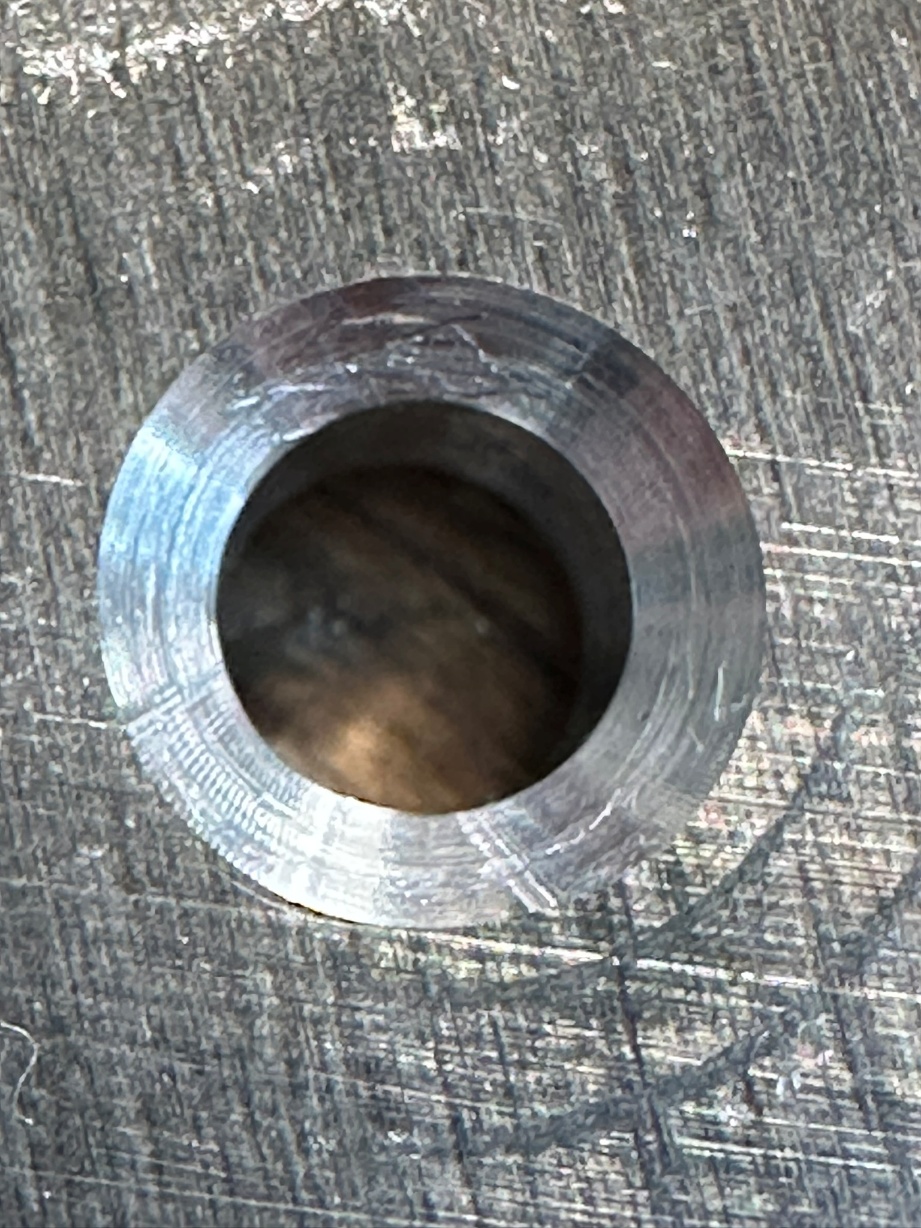
Architecture selection depends on the material and the required operation. The document describes two solutions with different feed principles.
PNEUMATIC FEED
This configuration is intended primarily for precision countersinking in non-ferrous materials, including composites and aluminium alloys.
MECHANICAL FEED
Two high-performance electric motors allow rotational speed and feed to be programmed through software.
The configuration should be assessed against the material, hole geometry, required countersink and application process requirements.
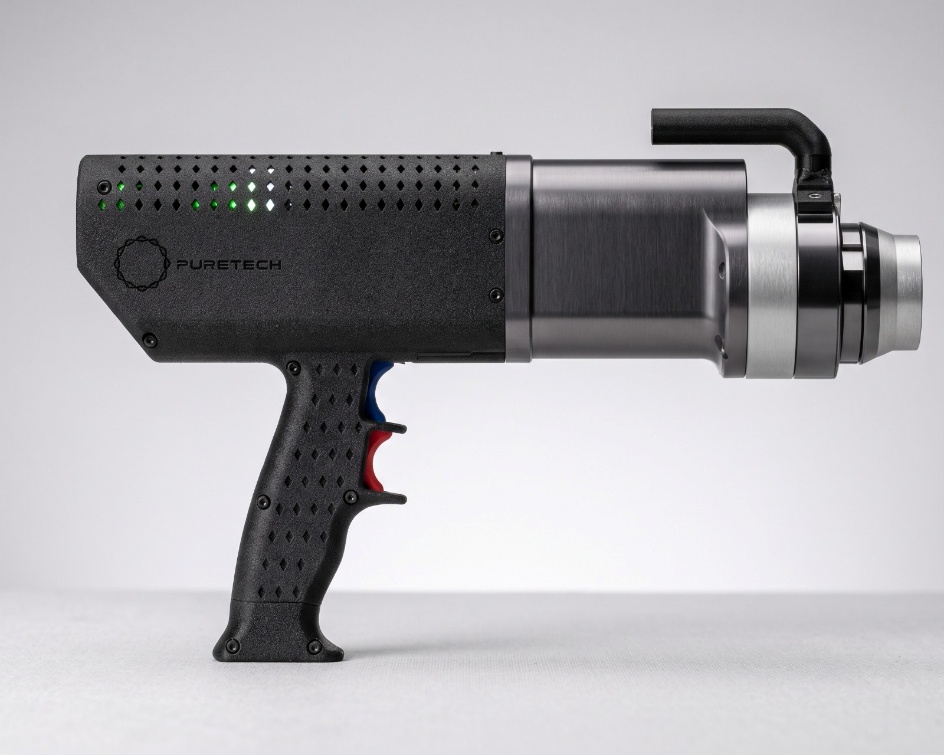
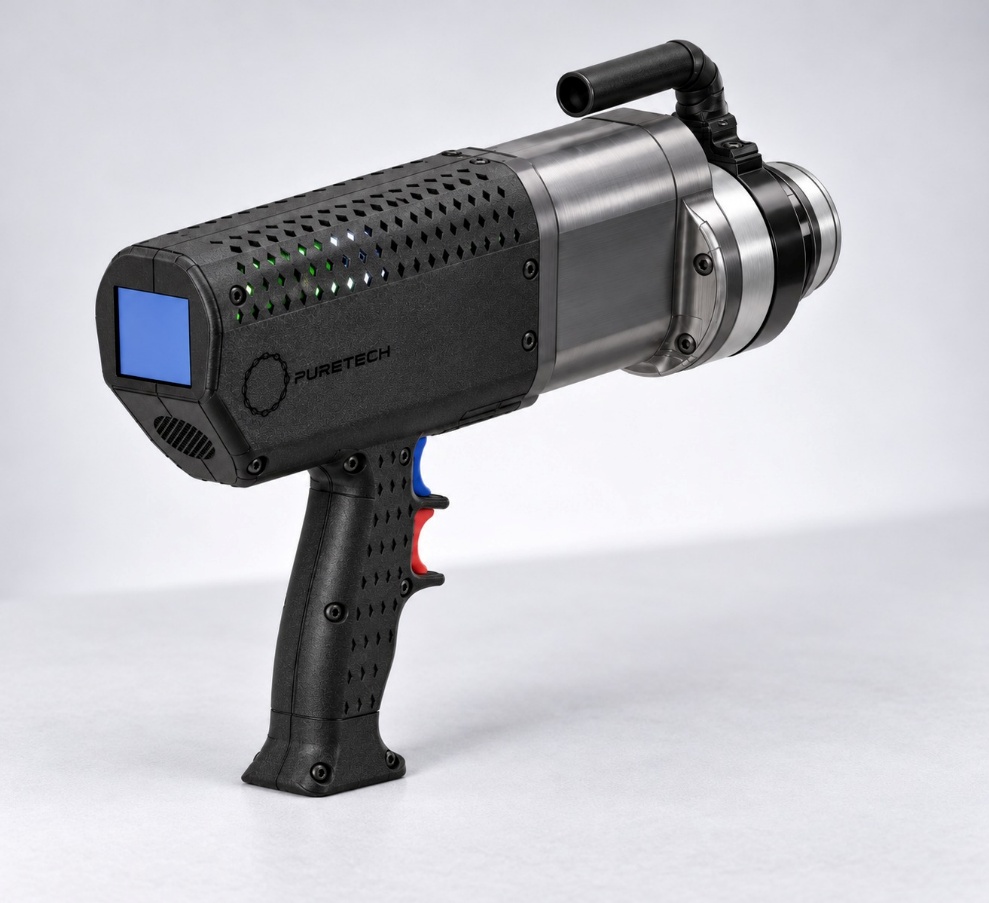
In EasyNut PF systems, two high-performance electric motors allow rotational speed and feed to be programmed through software. Together with motors developed for this architecture, they provide a wide speed range and differentiated feed rates according to the workpiece material, diameter and tool material.
Conceptual diagram of the parameters described in the technical document. It does not represent a cutting curve or a table of process values.
SBS drilling (Step By Step drilling) modulates the impact frequency applied to the tool to promote chip breaking. This control complements the management of rotational speed and feed during the drilling cycle.
Illustration of the SBS drilling principle; the document does not specify frequencies, chip dimensions or quantitative values.
The architecture is designed to provide power and transmission to different end-effector types. Depending on the application, the platform can be configured for combustor drilling, nutplate installation and specialized precision operations.
Drilling systems configured for the required access and process.
Installation configurations using EasyNut PF tooling.
End effectors adapted to specific precision operations.
Contact the PURETECH team to assess the right configuration for your application.